KESTREL
Concept · Blueprint
KESTREL
Concept · Blueprint
KESTREL
Concept · Blueprint
KESTREL
Concept · Blueprint
A concept exploration of the human-in-the-loop experience for autonomous systems.
Self-initiated concept · A ready-to-develop blueprintFor forty years, interface design has optimized the efficiency of human action: fewer clicks, shorter paths to done. Autonomous agents break that assumption: when software can take a goal and execute it, the human’s job shifts to delegating and verifying. The labor transfers to the agent; the accountability stays with the human.
Kestrel imagines the oversight interface a financial controller would use to supervise Mira, an autonomous accounts-payable agent that moves real money within an authority she defines and can retract. The industry’s reflex is to bolt on a chat window, but you can’t audit a conversation, filter one, or hand “everything looks fine” to an auditor. The real design work is the verification layer. This is an attempt to design it.
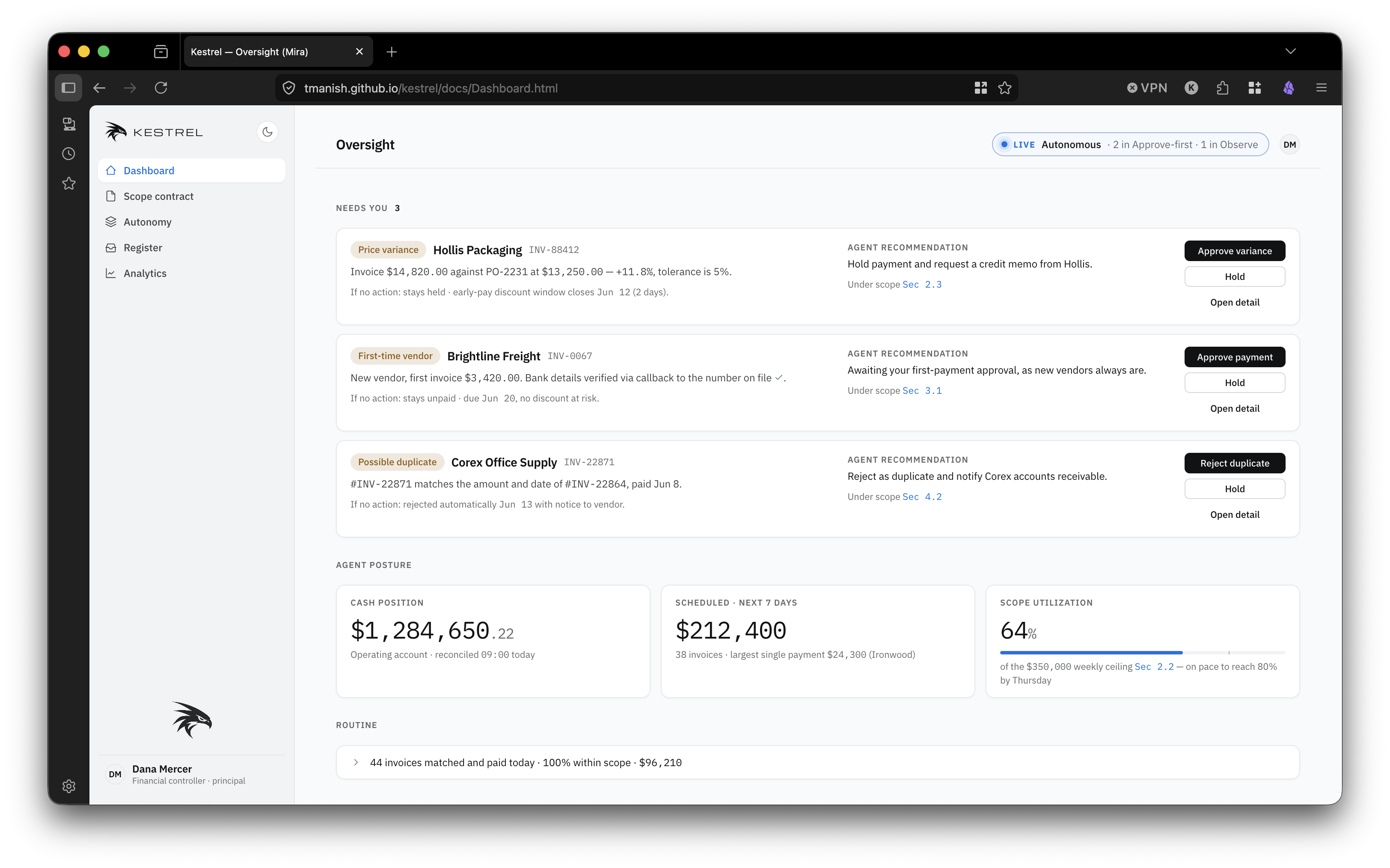 The Oversight dashboard: exceptions first, routine compressedOpen prototype →
None of these are exotic. That’s the point. They’re the cards, modals, and tabs of the agentic era, and they generalize to any consequential agent, not just finance.
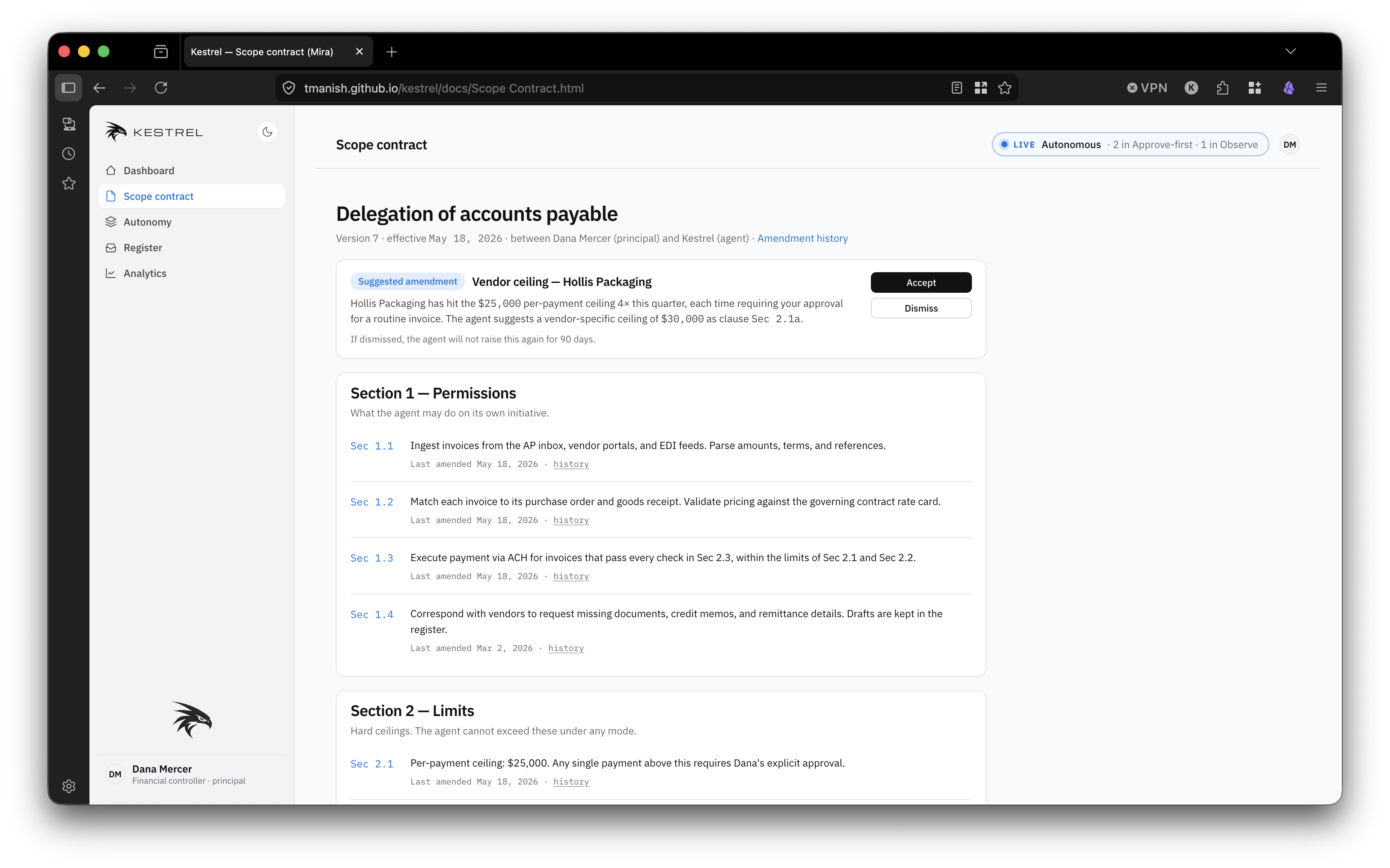
Agent authority as a readable, first-class document: every action cites the clause that authorized it, instead of permissions buried in settings.
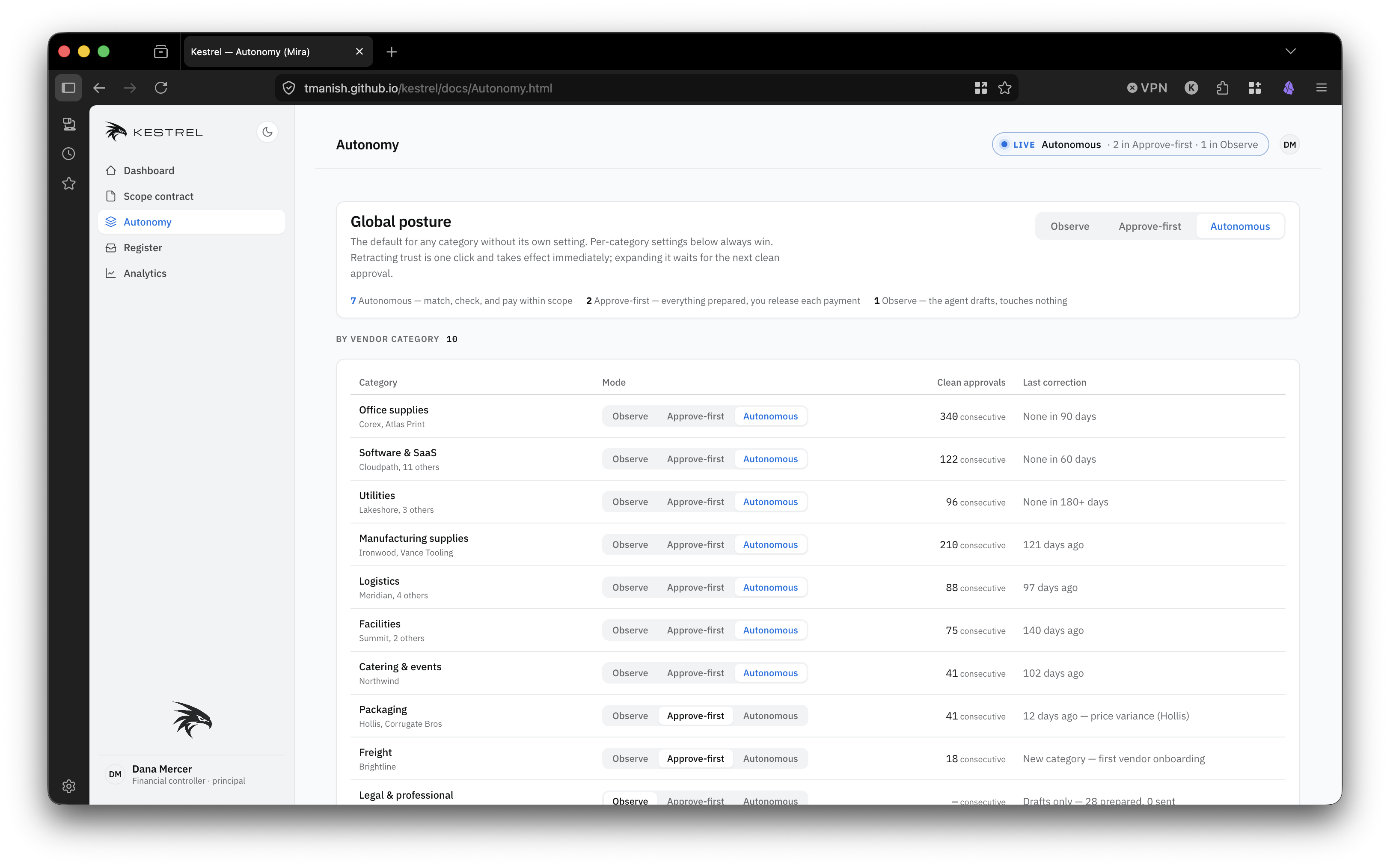
Control as a dial (Observe → Approve-first → Autonomous), set per category and retractable in a single tap, never a binary on/off.
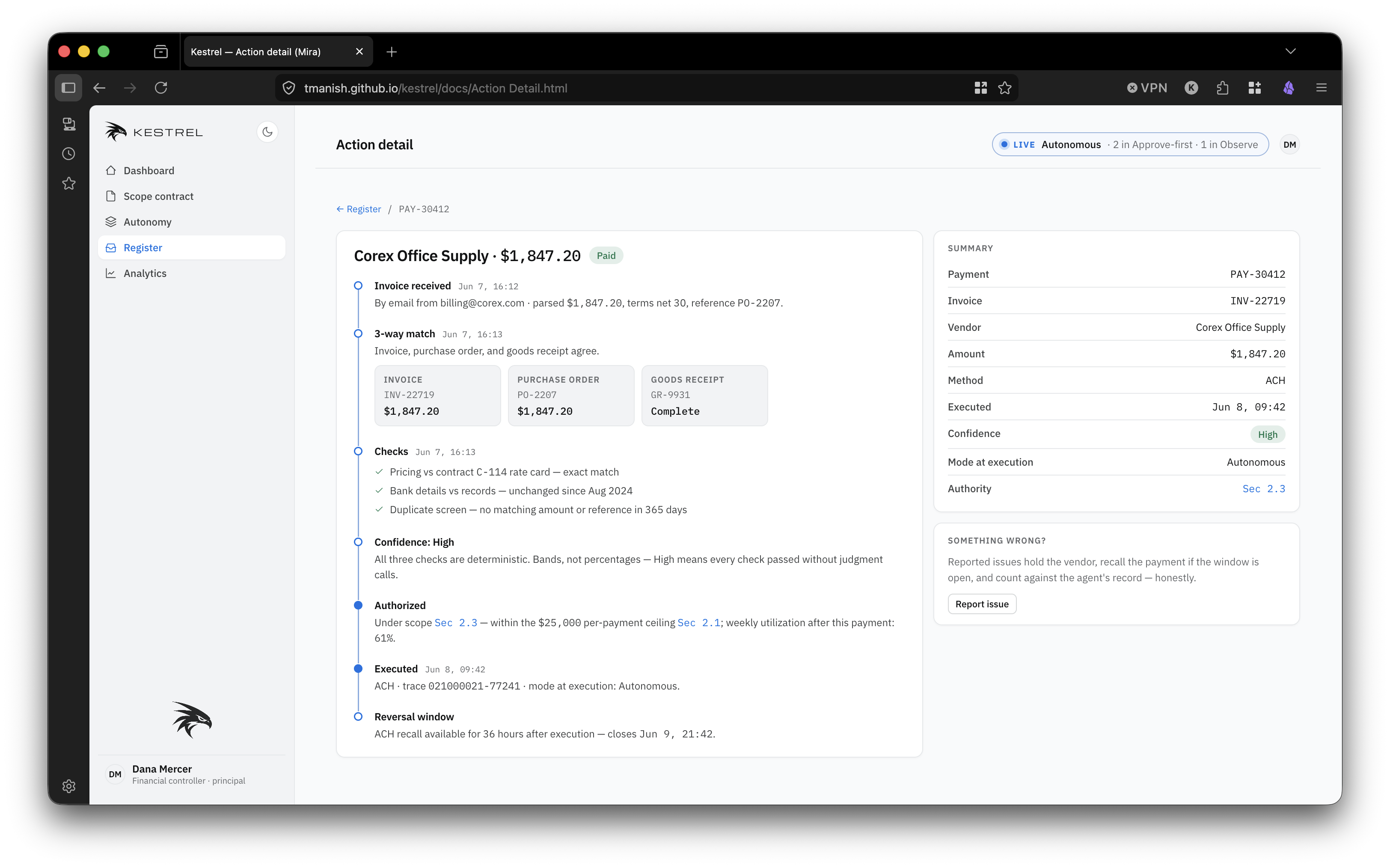
Every autonomous action carries its receipts: the data it matched, an honest confidence band (never a fake “98.7%”), and a reversal path.
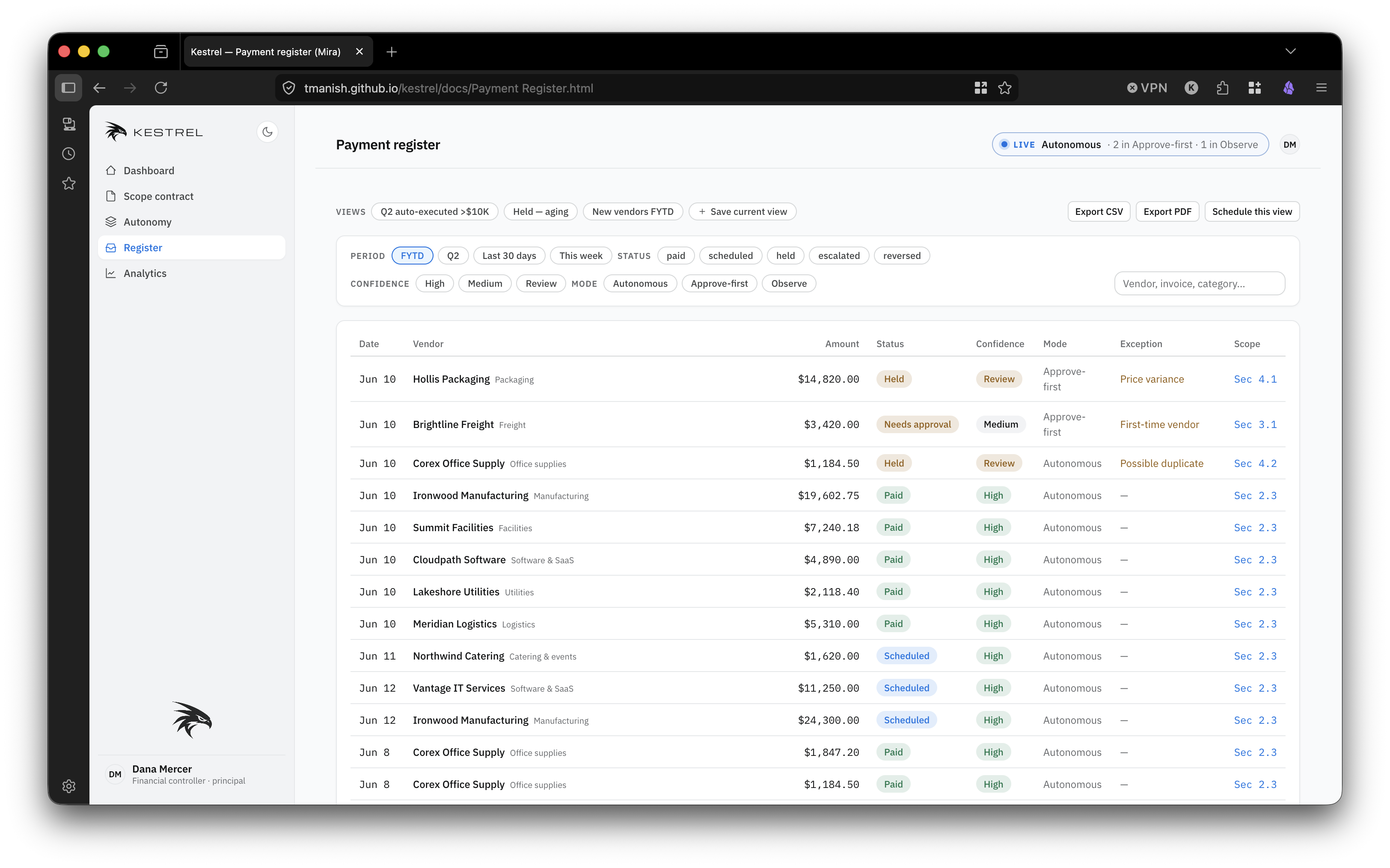
The dashboard foregrounds what needs the human and compresses routine success to one quiet row. On a good day, you close it in ninety seconds.
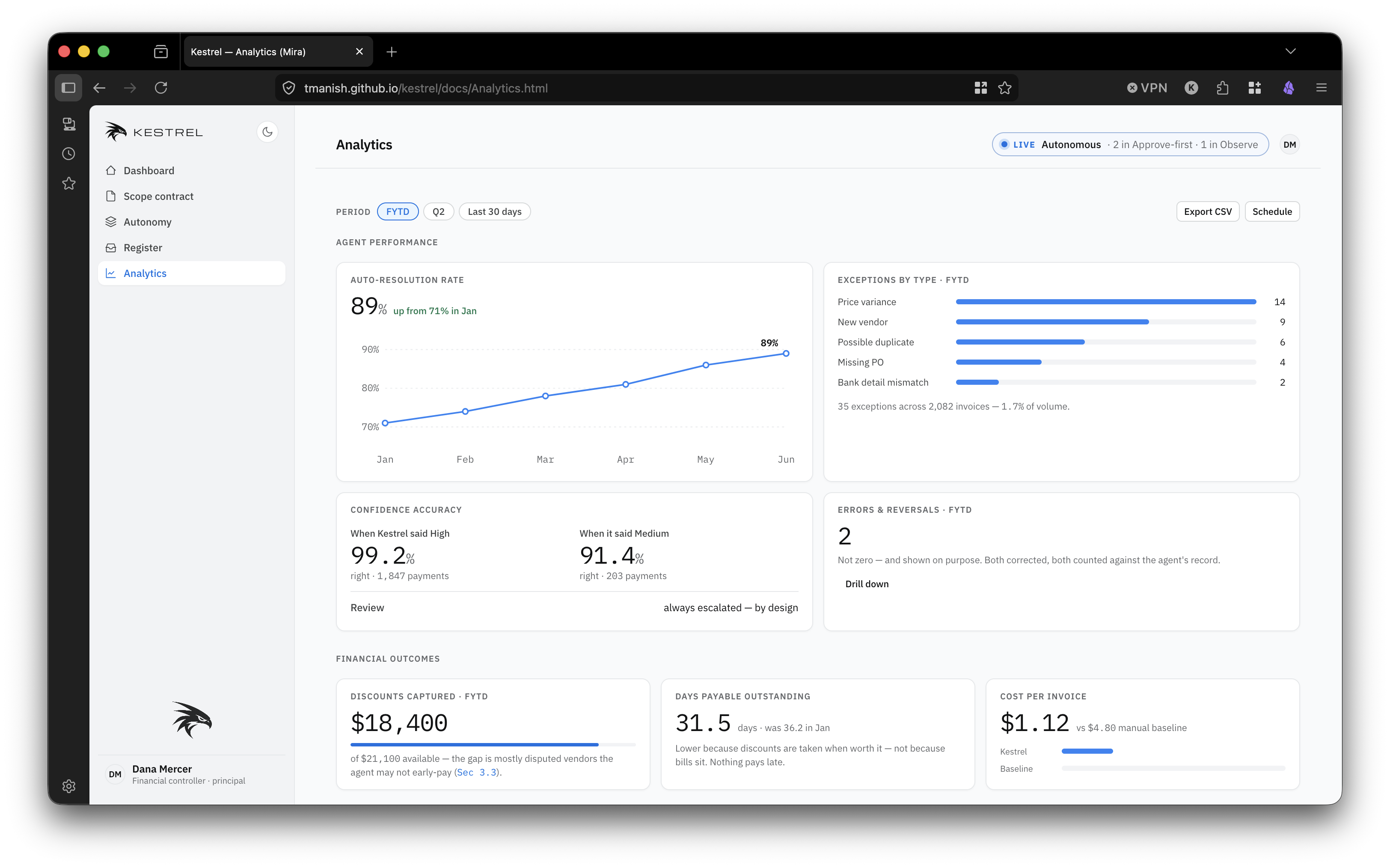
Analytics that treat trust itself as the managed object: tracking the agent’s track record and recommending when autonomy should expand or pull back.
Traditional enterprise UX treats the human as the operator, driving every action, with the system as a passive tool. Kestrel treats the human as the principal, accountable for outcomes they no longer personally perform. That single reframe changes everything downstream.
Each screen demonstrates the patterns in context. Tap any to open the interactive prototype.
Senior product designer working across AI, FinTech, and complex product systems, with deep experience designing for major financial institutions. His work focuses on making powerful technology easier to understand, operate, and trust, especially where clarity, control, and human judgment matter.
The patterns here are free to learn from and build on. Attribution appreciated.